How the Internet Turned Casual Entertainment into Everyday Culture
Not long ago, entertainment had a schedule. Television programs started at fixed hours, cinemas released films on certain days, and games were something people did at arcades or on consoles during clearly defined moments of leisure. The idea of entertainment was tied to time and place. It existed in pockets of the day rather than flowing through it.
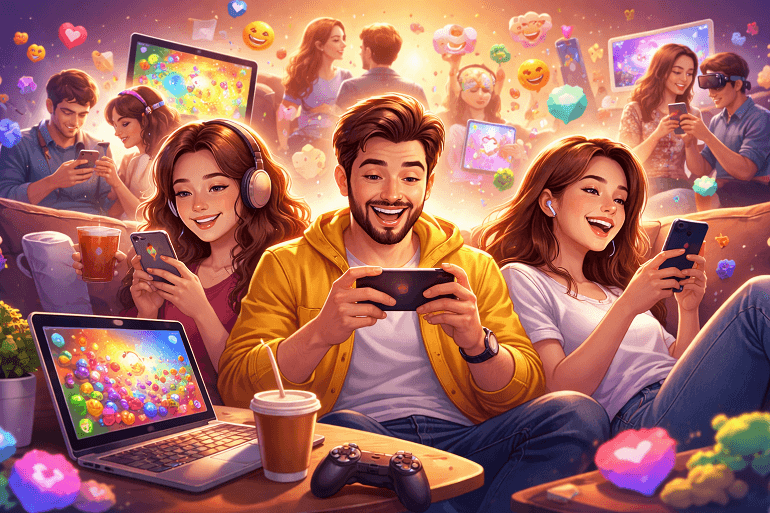
The internet quietly altered that rhythm. What once belonged to evenings or weekends now slips into ordinary hours. A short video appears while waiting for a train. A puzzle game fills a quiet coffee break. A music clip or meme travels through group chats before lunch. These moments are small, sometimes almost invisible, yet they shape daily life in ways that were impossible a generation ago.
Casual entertainment did not disappear. It multiplied, expanded, and slowly blended into culture itself.
From scheduled fun to constant presence
Early online entertainment still imitated older habits. People logged in to specific websites to watch clips or play browser games. The experience felt separate from everyday routines. One had to intentionally “go online” for amusement.
Over time that barrier faded. Smartphones made entertainment portable, while platforms redesigned their systems to fit short bursts of attention. Instead of requiring long sessions, digital services learned to accommodate minutes. Entertainment became modular.
A person could listen to a podcast while commuting, scroll through humorous posts while waiting in line, or open a small game during a pause between tasks. None of these activities felt like a major commitment. They were brief interruptions that fit naturally into the rhythm of daily responsibilities.
This shift changed perception. Entertainment stopped being something that interrupted life and started becoming something woven through it.
Micro-moments and the psychology of repetition
The success of online entertainment relies heavily on rhythm. Short interactions create small cycles of curiosity and reward. A notification appears. A message arrives. A new clip or mini-challenge waits inside an app.
These interactions rarely demand full concentration. Instead they rely on familiarity and repetition. The brain quickly recognizes patterns and anticipates the next step. The comfort of predictable interaction plays a key role in making digital entertainment part of everyday culture.
Music platforms illustrate this well. A listener might start with a single track and then continue through automated playlists. The transition between songs feels smooth and effortless. What begins as a quick distraction becomes a background presence throughout the day.
Video platforms function in a similar way. A short clip often leads to another through recommendation systems. The viewing experience stretches into a quiet chain of micro-moments that feel casual and spontaneous.
Entertainment in this format rarely demands planning. It simply appears and fits into available time.
Digital communities reshape the meaning of fun
Another reason casual entertainment became cultural currency lies in community participation. Online platforms rarely operate as solitary experiences. Even small interactions carry a social dimension.
People share memes, exchange game tips, comment on videos, or compare scores. These acts transform individual amusement into shared culture. A simple online joke can travel across continents within hours and become part of collective conversation.
Communities also shape trends in entertainment. When a new format or game mechanic becomes popular, discussion spreads through forums, group chats, and streaming platforms. The activity itself becomes less significant than the surrounding dialogue. Entertainment turns into social language.
Within many online groups, discovering a new digital platform or game can become a small badge of curiosity. People enjoy recommending tools, experiences, or casual games they recently encountered. Some discussions mention platforms like Super88 in the context of modern digital entertainment ecosystems, where users appreciate quick interactions and light gaming formats that fit naturally into everyday routines.
The appeal rarely comes from complexity. It often grows from simplicity and accessibility.
The rise of portable entertainment
Technology quietly reshaped how entertainment travels with people throughout the day. Portable devices removed the physical boundary between work environments and leisure spaces. A phone in a pocket now holds music libraries, games, videos, and social platforms.
This portability created a culture of “in-between entertainment.” Activities fill transitional moments: waiting rooms, short commutes, lunch breaks, or late evening quiet.
None of these moments individually seem significant. Together they form a continuous thread of digital interaction.
Short games illustrate this perfectly. They often feature simple rules and fast outcomes. A round might last only a minute or two, making it ideal for spontaneous breaks. Many platforms emphasize visual clarity and intuitive controls rather than complex systems.
In discussions about casual digital games, platforms occasionally referenced in online communities include titles or services connected to Slot88, often mentioned as part of conversations about how simple mechanics and quick feedback loops keep players engaged without requiring long sessions.
The popularity of such formats reflects a broader pattern. Digital culture values accessibility over complexity when it comes to everyday entertainment.
Algorithms as quiet cultural curators
Another transformation came from recommendation systems. These systems study viewing habits, listening patterns, and interaction history. The goal is simple: present something interesting before a person even begins searching. The effect is subtle yet powerful.
People no longer need to actively look for entertainment. Platforms place suggestions directly in front of them. A music service proposes a new playlist. A video platform surfaces trending clips. A game store recommends a quick mobile puzzle.
This automated guidance reshapes cultural discovery. What once depended on television schedules or magazine reviews now flows through algorithms designed to predict curiosity.
Critics often focus on the technical side of this process. Yet the cultural outcome deserves attention as well. Algorithms accelerate the spread of shared experiences. A catchy song, humorous video, or unusual game mechanic can travel rapidly through millions of users.
Digital entertainment evolves at remarkable speed.
The blurred boundary between media and interaction
Traditional entertainment usually required passive consumption. A person watched a film or listened to a song without influencing the content. Online platforms introduced a different model. Users interact.
Comments, likes, shares, remixes, and user-generated content turn audiences into participants. Entertainment becomes dynamic rather than fixed.
Streaming platforms illustrate this change vividly. Viewers often interact through live chats during broadcasts. Reactions appear instantly, shaping the atmosphere of the event. The boundary between performer and audience grows thinner.
Short-form video platforms amplify this effect further. A single idea can trigger thousands of variations created by different users. Entertainment evolves through imitation and reinterpretation. Culture becomes collaborative.
Casual entertainment as daily rhythm
When entertainment becomes integrated into daily routines, it stops feeling like a special activity. It becomes part of cultural rhythm.
Morning commutes include podcasts. Afternoon breaks include quick games. Evenings include streaming videos or browsing creative content shared by friends.
These habits create a background layer of digital culture that accompanies ordinary life. The content itself changes rapidly, yet the structure of interaction remains consistent.
Short interactions. Familiar interfaces. Immediate access. The simplicity of these patterns explains why casual entertainment continues expanding across generations.
Creativity within small formats
One surprising effect of digital culture is the creativity emerging from small formats. Short videos, compact games, and quick audio clips often encourage experimentation.
Creators work within tight limits. They must capture attention quickly and deliver an idea within seconds or minutes. This challenge often produces inventive storytelling and unusual humor.
Micro-content thrives because it respects the pace of modern attention. It does not demand extended concentration. Instead it offers compact experiences that can be enjoyed almost anywhere.
Over time these small creative pieces accumulate into larger cultural narratives. A meme format evolves through countless variations. A musical phrase spreads through short video edits. A game mechanic inspires new designs. Casual entertainment becomes a laboratory for digital creativity.
Cultural memory in the age of fragments
In earlier decades, cultural memory centered around large shared events: famous films, major concerts, or television series watched by millions at the same time. Digital culture distributes memory differently.
Instead of a few dominant events, countless smaller experiences circulate through networks. A viral video, a clever online joke, or a unique mobile game may shape conversations for a week before being replaced by something new.
The pace is fast, yet the accumulation of these fragments forms a collective record of online culture.
Many people remember where they first saw a particular meme or which platform introduced them to a new entertainment format. These memories feel personal even though millions of others experienced similar moments.
A culture shaped by accessibility
Accessibility remains the strongest force behind the transformation of entertainment. Digital platforms reduce barriers. A creator can publish content without traditional gatekeepers. A viewer can discover it within seconds.
This open environment encourages diversity in style and format. Entertainment no longer follows a single model dictated by large studios or networks. Independent creators, small studios, and casual developers contribute equally to the cultural stream.
The result is an ecosystem where experimentation thrives. Casual entertainment does not compete with traditional media. It complements it. Films, music albums, and long-form storytelling continue to exist, while short digital experiences fill the gaps between them. Together they create a layered cultural environment.
The quiet transformation of everyday culture
The internet did not simply provide new forms of entertainment. It changed how people integrate enjoyment into ordinary routines.
Casual amusement now appears in moments that once felt empty: waiting in line, riding public transport, or taking a brief break from work. These interactions are brief yet meaningful. They refresh attention, spark curiosity, and often connect people through shared references.
Digital culture thrives on these small interactions. What once required planning now emerges spontaneously through a screen carried in a pocket. Entertainment is no longer confined to theaters, living rooms, or gaming consoles. It travels with people and adapts to their schedules.
Casual entertainment became everyday culture not through a dramatic shift, but through countless small changes in behavior. Each notification, short video, quick game, or shared meme contributes to a pattern that defines modern digital life.
And in those quiet moments between tasks, the internet continues to shape how people relax, communicate, and experience culture together.